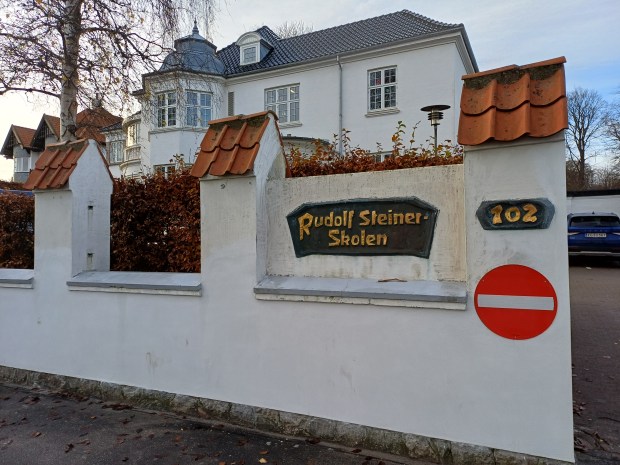
Narratives and Realities in Danish Steiner Schools
For decades, Steiner schools in Denmark have occupied a distinctive place in the country’s educational landscape. Known for their emphasis on creativity, crafts, and music, they have attracted parents looking for an alternative to mainstream schooling. Today, 14 Steiner schools operate across Denmark, with just over 3,100 students enrolled (2023). Some are well-established institutions with strong local reputations; others are small schools struggling to maintain student numbers.
School representatives often highlight that enrolment has risen in recent years. But historically the movement was larger. In 1989 there were 17 Steiner schools in Denmark, and in the early 2000s the number peaked at 19.
Most of these schools are located in larger cities and tend to draw families from progressive or culturally oriented environments. For many parents, the appeal lies in the schools’ emphasis on artistic expression and hands-on learning. Less widely discussed, however, is the philosophical foundation on which the schools were built: the spiritual philosophy of Rudolf Steiner and his movement, anthroposophy.
Anthroposophy has long been a subject of criticism from outside the Steiner movement. Yet for many years its role within Danish Steiner schools remained largely outside the public spotlight.
That changed in 2023.
That year, a film company began working on a critical documentary about Steiner schools in Denmark. The project quickly triggered a strong reaction from within the school community. According to those involved in the production, school representatives feared the documentary could seriously damage the schools’ reputation and public standing.
The filmmakers soon encountered legal challenges and sustained pressure. At one stage the project was halted altogether. But when the documentary later moved to a different television broadcaster, the production resumed and eventually reached the screen. The process had taken its toll, however. The final film was significantly shorter and more limited in scope than originally planned.
When it was finally broadcast in 2025, the documentary focused primarily on the presence of ideas such as karma and reincarnation in Danish Steiner schools. Other critical themes had disappeared along the way.
Even so, the film succeeded in bringing a previously little-discussed topic into the Danish public conversation: the extent to which anthroposophical concepts—including karma, reincarnation, and other esoteric ideas—have influenced thinking within some Steiner schools.
The broadcast sparked a wider debate about the role of anthroposophy in Steiner education.
It also revealed an internal tension within the Steiner school community itself. Some schools and representatives have been reluctant to explain publicly whether, or how, anthroposophical ideas influence classroom practice. Critics see this caution as a strategic attempt to distance the schools from their spiritual roots in order to appeal to a broader group of parents.
Others within the movement take the opposite view. For committed anthroposophists, anthroposophy is not a marginal influence but the foundation of Steiner education. In their view, it shapes everything—from the structure of the curriculum to the colours used in classrooms and the seasonal festivals celebrated by the schools. From this perspective, the Steiner school is not merely an alternative educational model but an institution consciously designed around Rudolf Steiner’s ideas about human spiritual development through reincarnation and karma.
This tension leaves Danish Steiner schools facing a fundamental question about their future.
Should they openly acknowledge their anthroposophical roots, even if doing so risks limiting their appeal to a smaller audience? Or should they adapt to broader public expectations—and in doing so risk diluting the philosophical foundation that has historically defined them?
For the Steiner movement in Denmark, the answer may prove decisive.
 Steinerkritisk Forum