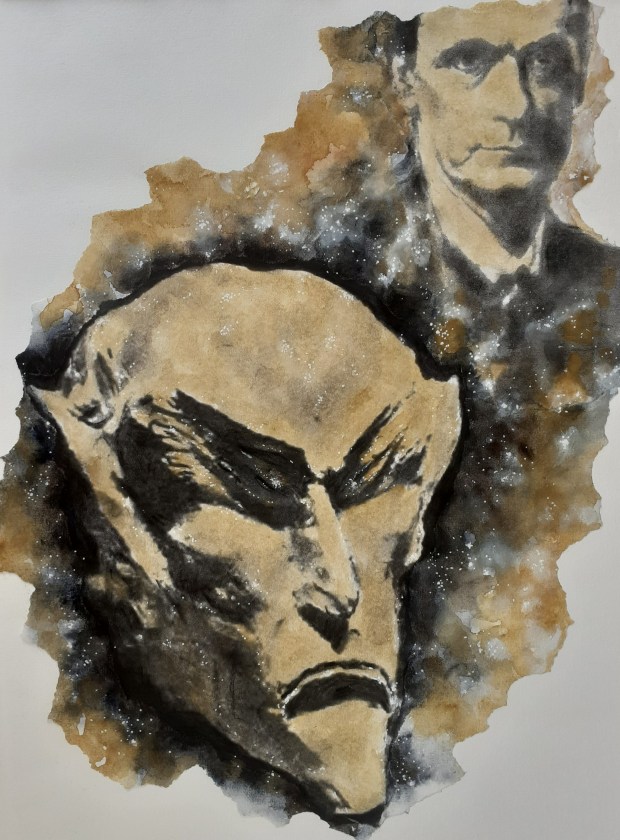
Ahriman, Conspiracy Thinking — and the Steiner Movement’s Credibility
In the spiritual philosophy of Rudolf Steiner, the founder of Anthroposophy, the figure of Ahriman occupies a striking role. Inspired in part by Zoroastrian mythology, Steiner described Ahriman as a powerful force of deception, materialism and spiritual darkness — a kind of anthroposophical counterpart to the Antichrist.
Steiner also predicted that Ahriman would one day incarnate physically on Earth during the third millennium.
More than a century later, this idea has taken on a new life — not as a symbolic concept, but increasingly as a framework for conspiracy thinking within parts of the Steiner world.
In some Steiner circles and on social media, Ahriman is now invoked to explain contemporary crises. Covid-19 vaccines, artificial intelligence, the World Economic Forum, and global conflicts are sometimes interpreted as signs of Ahriman’s growing influence — even as the fulfillment of Steiner’s warnings about a coming age of spiritual deception.
Some enthusiasts go further still. Through numerology and astrology, they speculate that Ahriman may already have been born — possibly in 1998, a year associated with the number 666 — with a public appearance expected around 2030.
Ideas like these might sound marginal. But they circulate within networks connected to a movement that operates hundreds of schools and educational institutions around the world.
Books such as Peter Selg’s The Future of Ahriman and The Awakening of Souls add to the atmosphere by linking the concept of Ahriman’s future incarnation to modern developments such as pandemics, technological change and transhumanism.
This trend has not gone unnoticed within the movement itself. The Norwegian anthroposophist Frode Barkved has warned in his article Anthroposophy and Conspiracy Thinking that such interpretations risk damaging the credibility of Anthroposophy and deepening internal divisions.
Yet the problem remains largely invisible to the outside world.
Many parents who send their children to Steiner schools and kindergartens are unaware that ideas rooted in Steiner’s esoteric worldview still form part of the intellectual background in the training of teachers and educators.
The question is therefore not only theological or philosophical. It is institutional.
Educational institutions that work with children must be built on critical thinking, intellectual transparency and public trust. When conspiracy narratives begin to circulate within their surrounding culture, the credibility of those institutions inevitably comes into question.
If the Steiner movement wants its schools and institutions to remain credible in the 21st century, silence is not an option. Those within the movement who value rational inquiry and democratic values must speak clearly, distance themselves from conspiracy thinking, and insist that educational institutions serving children and young people are grounded in open, critical and evidence-based thinking.
Anything less risks allowing myth, speculation and conspiratorial narratives to overshadow the ideals of education itself.
 Steinerkritisk Forum